
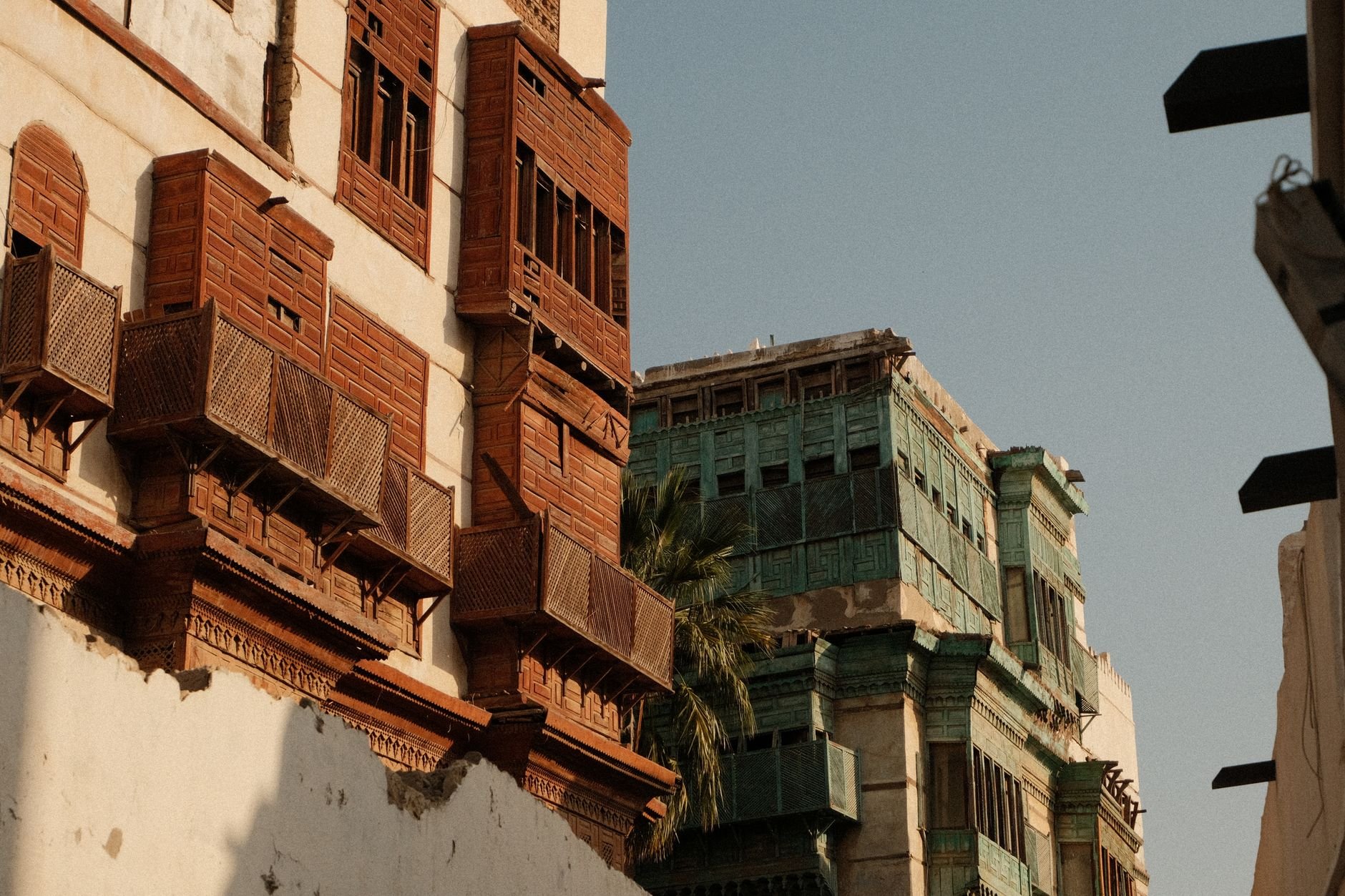
Welcome to our Historic Jeddah (Al-Balad) guide — a full run-through of what to see, eat and do in the UNESCO World Heritage heart of the old city. Known to everyone here simply as Al-Balad, this is the historic core of Jeddah, and the good news is that wandering its lanes costs you nothing. Entry to the public streets is free; you only pay for the heritage houses, museums, guided tours, and the food you'll inevitably end up eating. Here's exactly what to see, eat and do to make the most of a half-day or evening in Al-Balad.
What makes Al-Balad special
This is Jeddah's original old town, a dense warren of centuries-old coral-stone houses fronted by those unmistakable rawasheen — the carved wooden lattice balconies that let air flow while keeping interiors private. Alongside the tall merchant houses you'll find traditional souqs, historic city gates, old mosques, and painstakingly restored heritage buildings.
The district is pedestrian-focused, so leave the car behind. Driving simply doesn't work inside the narrow historic lanes — you'll get stuck and frustrated. Instead, take a taxi, Uber, or Careem to the perimeter and walk in. Typical central-Jeddah fares run around SAR 15–30. Bab Makkah is a popular arrival point and a natural place to start exploring.
What to see in Al-Balad
You could lose an afternoon just looking up at the facades, but these are the highlights worth building your walk around:
- The coral-stone merchant houses — several stand multiple storeys high, their rawasheen painted in weathered greens and browns. Some are restored and open to visitors.
- The historic gates — Bab Makkah and the other old city gates mark the edges of the original walled town.
- Traditional souqs — wander for spices, oud, fabrics, gold, and souvenirs. Haggling is expected and part of the fun.
- Old mosques — among the oldest in Jeddah, woven right into the residential fabric.
- Restored heritage houses and small museums — these keep their own hours and ticket prices, so check before you go.
The streets themselves are generally accessible throughout the day. It's the individual houses, museums, tours, and events that run separate hours and fees.
Best time to visit
Mornings are cool and quiet — ideal for photos and a slow breakfast. Evenings are when Al-Balad truly comes alive: activity picks up noticeably after Maghrib, especially at weekends, when the cafés fill, the lanterns glow, and the souqs buzz. If you can, come for both.
Walking tours
A guided walk is the easiest way to understand what you're looking at — the history behind the rawasheen, the merchant families, the old trade routes. Walking tours typically cost around SAR 80–180 per person for roughly 2–3 hours. Always verify the operator, the meeting point, and the current price before you book, as these details change.
Where and what to eat in Al-Balad
Al-Balad is one of the best places in the Kingdom to eat traditional Hejazi food, and it's refreshingly affordable. Here's a rough guide to what things cost:
- Foul and tamees breakfast — typically SAR 12–20. The classic Hejazi morning plate.
- Mutabbaq — typically SAR 10–15. A stuffed, griddled flatbread; grab it hot from the pan.
- Balila — typically SAR 5–15. Warm spiced chickpeas, a beloved street snack.
- Kabsa or mandi platters — typically SAR 30–70, for a proper rice-and-meat meal.
- Sobia and fresh juices — typically SAR 5–10 to wash it all down.
Breakfast spots
Al-Shashai is a go-to for a traditional Hejazi breakfast — foul, eggs and the rest — for about SAR 15–30, with hours running roughly from 7am until around midnight. It's an easy, authentic place to start the day.
Seafood near the old harbour
Jeddah is a Red Sea port, and Al-Balad's fish restaurants near the old harbour deliver. A full fish meal with rice and salad typically runs SAR 60–120. At Albasali, seafood meals are typically around SAR 60–80 — fresh, simple, and satisfying.
Rooftop cafés
For the view, head to the rooftop cafés around Sharia Al-Qabel. There's generally no entry charge, and a coffee typically costs SAR 15–25. Settle in at golden hour, look out over the rawasheen rooftops, and watch the district light up.
A note on Ramadan
Al-Balad takes on a special energy during Ramadan. In Ramadan 2026, the Bastat Al-Balad food stalls reportedly operated from roughly 5pm to 3am, serving dishes like balila, kebda (liver), and sobia deep into the night. Do bear in mind that Ramadan dates shift each year with the Islamic lunar calendar, so check the calendar for 2026 and beyond before you plan. If you're in Jeddah during the holy month, the late-night food scene is unmissable.
How much to budget
Al-Balad is wonderfully easy on the wallet:
- Street access — free.
- Getting there — around SAR 15–30 by taxi, Uber, or Careem.
- Walking tour — around SAR 80–180
- A full evening of food and drink — typically SAR 150–350, depending on where you eat and how many stops you make.
Practical tip: many small food businesses may accept only cash, so carry a few small SAR notes. Dinner demand climbs after Maghrib, so arrive a little early at weekends if you want a rooftop table.
How to get to Al-Balad
Al-Balad sits in central Jeddah and is best reached by ride-hail. Book an Uber or Careem (or hail a taxi) to the district perimeter — Bab Makkah is a reliable drop-off point — and continue on foot. Don't try to drive into the lanes themselves; they're narrow, historic, and pedestrian-first. From King Abdulaziz International Airport, it's a straightforward ride into the old town.
FAQs
Is entry to Historic Jeddah (Al-Balad) free?
Yes. General entry to the public streets is free. You only pay for individual heritage houses, museums, guided tours, and events, which keep their own hours and fees.
How do I get to Al-Balad?
Take a taxi, Uber, or Careem to the perimeter — Bab Makkah is a common arrival point — and walk in. Central-Jeddah fares typically run around SAR 15–30. Avoid driving inside the narrow historic lanes.
What should I eat in Al-Balad?
Try a traditional Hejazi breakfast of foul and tamees, grab mutabbaq and balila as snacks, order a kabsa or mandi platter, and finish with sobia or fresh juice. Seafood near the old harbour and rooftop coffee around Sharia Al-Qabel are also highlights.
How much does a walking tour cost?
Walking tours typically cost around SAR 80–180 per person for about 2–3 hours. Verify the operator, meeting point, and current price before booking.
When is the best time to visit?
Mornings are cool and quiet; evenings are livelier, with activity increasing after Maghrib, especially at weekends. During Ramadan, the late-night food stalls stay open into the early hours.
Is Al-Balad accessible for people with mobility issues?
Be prepared for uneven, cobbled lanes, narrow alleys, and the occasional step, which can make parts of the district tricky for wheelchairs or anyone with limited mobility. Flat, comfortable shoes help, and mornings are quieter and easier to navigate than busy weekend evenings. Restored heritage houses vary in their setup, so ask ahead if step-free access matters to you.
Should I bring cash?
Yes. Many small food businesses may accept only cash, so carry small SAR notes alongside your card.
Planning a longer stay in the city? Find a place close to the action with our Jeddah accommodation listings on Saudi Living, and browse more things to do in Jeddah to round out your trip.
Stay updated with the latest news, events, sports updates, business insights, real estate and lifestyle stories on Saudi Living — the leading online platform for residents, expats, and visitors in Saudi Arabia.
Follow Saudi Living for daily updates:
- Instagram - @saudiliving
- X - @saudiliving
- Facebook - @saudiliving
- YouTube - @saudiliving
Don't Miss Similar Listings
Be the first to know when new stories on this topic are published.


