Inspecting Used Appliances Before Buying: Expat Checks

Before you hand over a single riyal for that second-hand fridge or washing machine, make sure it powers on, cools or heats properly, runs on Saudi voltage, and comes with a written receipt. A used appliance in Riyadh or Jeddah can save you thousands of SAR — but only if you check it properly first. Inspecting used appliances before buying is exactly what every expat must get right, so here's the full checklist to run through before you pay.
Why a careful inspection matters for expats
Used appliances are one of the most popular categories on local classifieds, especially when families leave the Kingdom and sell everything in a hurry. That's great for your budget, but it also means you may be buying from someone who won't be around next month if the compressor dies.
As an expat, you also face two extra traps: appliances imported from countries with different electrical standards, and sellers who imply a "warranty" that doesn't actually transfer to you. A 20-minute inspection protects you from both.
Before you go — do your homework on the seller and the appliance
Do as much checking as you can before you travel across the city to view an item. Ask the seller to send clear photos of the appliance, its rating label, and the model and serial number.
Documents and details to confirm
- Original invoice — the first proof of where and when it was bought, and from which authorised agent.
- Model and serial number — note both; you'll use them to check for recalls and counterfeits.
- Manufacturing date — usually on the rating label; a "barely used" fridge that's actually eight years old is not a bargain.
- Ownership history — ask who used it, for how long, and whether it was ever repaired.
- Business details, if it's a shop — a registered second-hand dealer should be willing to share commercial registration details.
Take a minute to search the exact model and serial number online for manufacturer recalls or counterfeit warnings. Branded appliances sometimes have serial-number checkers on the maker's site.
Does it work on Saudi electricity?
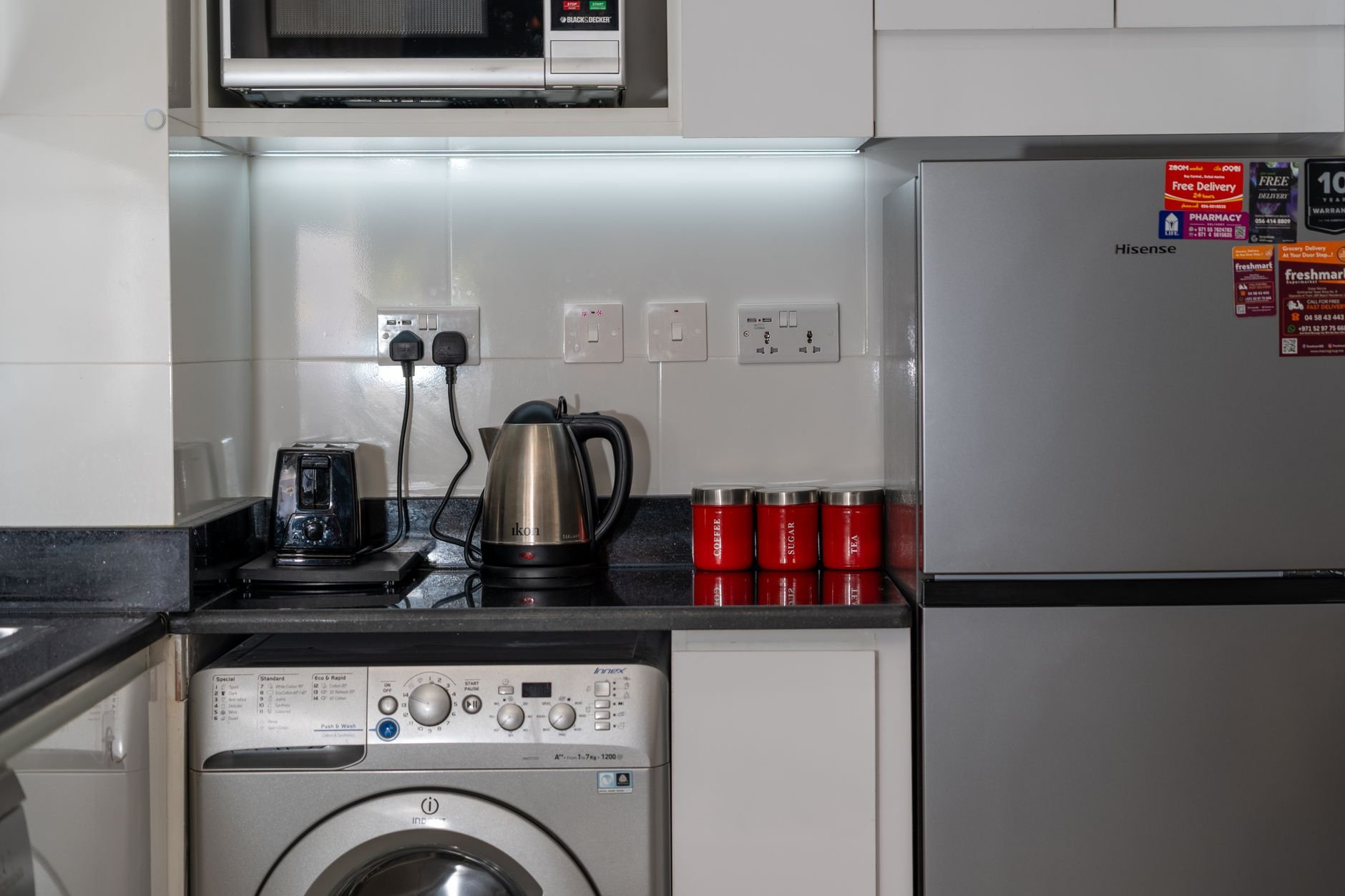
This is the single most common expat mistake. Saudi Arabia runs on 230V, and standard Saudi sockets use the three-pin UK-style (Type G) plug. Before you buy, confirm:
- Voltage — the appliance must be rated for 230V (or dual-voltage). A device built only for 110V/120V will need a bulky transformer or will burn out.
- Plug type — a non-Type-G plug means adapters, which is fine for small items but risky for high-draw appliances like ovens and ACs.
- Energy-efficiency label — the Saudi energy-efficiency card tells you running costs; an old, inefficient fridge quietly adds to your electricity bill.
- Safety markings — look for recognised safety and compliance marks on the rating plate.
The in-person test — never pay before it powers on
Rule one: test it fully before any payment. If the seller refuses to plug it in "because the power is off" or "it's already disconnected for moving," treat that as a warning and arrange to see it working another time.
For every appliance, run through the basics: power-on, every control and setting, heating or cooling, unusual noises, vibration, leaks, the state of doors and seals, the condition of the cable and plug, and that any safety switch trips correctly.
Refrigerators and air conditioners
- Let it run long enough to confirm it actually gets cold — don't trust a unit switched on five minutes before you arrive.
- Listen to the compressor: a loud, rattling or constantly cycling compressor is expensive to fix.
- Check for oily residue or hissing that could signal a refrigerant leak.
- Ask directly about repair history — a re-gassed AC or a replaced compressor changes the value.
- Inspect door seals; a fridge that doesn't seal wastes power and spoils food.
Washing machines and dishwashers
- Run a short cycle if you can: check it fills, drains, spins and heats.
- Watch for leaks under the machine and at the hose connections.
- Test the door lock — it should seal and release properly.
- Check hoses for cracks or hard, perished rubber.
- A machine that "walks" or bangs on spin may have worn bearings.
Ovens, microwaves and heaters
- Confirm the elements heat up and the thermostat responds.
- Test timers and any automatic shutoff — a heater without working auto-off is a fire risk.
- Check oven door insulation and seals; check the microwave door closes firmly.
- Make sure there's no smell of burning electrics when it runs.
Safety red flags that should end the deal
Some problems aren't worth any discount. Walk away — or renegotiate hard — if you spot:
- Burn marks, scorching or a melted smell around the plug or vents.
- Exposed wires, cracked cables or a damaged, taped-up plug.
- Corrosion or clear water damage inside the unit.
- Missing guards, grilles or safety covers.
- Unauthorised modifications or obvious non-original parts.
- Counterfeit signs — mismatched logos, poor build, a serial number that doesn't check out.
Warranties on used appliances — what's real and what isn't
A used appliance does not automatically carry a manufacturer warranty. In Saudi Arabia, electrical and electronic products are generally expected to carry a minimum two-year commercial warranty under the applicable rules — but there are important catches for second-hand buyers:
- It normally starts from the first purchase from the authorised agent or distributor, not from the day you buy it used. On an older appliance the warranty may already be finished.
- Coverage can be voided by misuse, negligence or failure to follow maintenance instructions — common with hard-used second-hand gear.
- Confirm directly with the authorised agent whether any manufacturer coverage is still active for that exact serial number. Don't rely on the seller's word.
If the seller personally offers an exchange, return or private guarantee, that's fine — but there's no universal Saudi validity period for a private seller's guarantee. Whatever period and terms you agree must be written into the sale. A verbal "don't worry, I'll fix it" is worth nothing once the money has changed hands.
Get it in writing — your receipt checklist
Always get a written receipt, even for a cheap item from a private seller. It should state:
- That the appliance is sold "used" and its exact described condition.
- The model and serial number.
- Included accessories (remote, trays, hoses, filters).
- The price and date of sale.
- The seller's name and contact details.
- Any agreed warranty, exchange or return period and its exact terms.
Keep everything: the receipt, proof of payment, photographs of the appliance and its serial number, your chat messages, and any inspection notes. This evidence is what makes a dispute winnable.
If something goes wrong — your rights and how to complain
If you later discover the appliance is defective, counterfeit, or non-compliant with Saudi standards, you can seek a refund — provided you can establish the defect or violation. That's exactly why your photos, serial number and messages matter.
For commercial violations — such as a registered dealer selling counterfeit goods, hiding defects, or refusing an agreed return — you can report the issue through the Ministry of Commerce's Commercial Report service or app, logging in with Nafath and attaching your photographs and invoice. The complaint service also handles sales and invoice problems, missing product information, and recall-related issues. You can reach the Ministry of Commerce by phone on 1900.
One reassurance: there's no government fee for your ordinary visual or functional inspection of a used household appliance, so take your time and test everything thoroughly before you pay.
Ready to shop smart? Browse used appliances and household items in the Saudi Living classifieds — and run this checklist on every listing before you buy.
FAQs
Do used appliances in Saudi Arabia come with a warranty?
Not automatically. Any manufacturer warranty normally runs from the first purchase from the authorised agent, so it may already have expired. Confirm active coverage with the agent using the serial number, and put any private seller's guarantee in writing.
What voltage do appliances need to work in Saudi Arabia?
Saudi Arabia uses 230V with UK-style three-pin (Type G) sockets. Buy appliances rated for 230V or dual-voltage; 110V-only devices need a transformer and are risky for high-draw items like ovens and air conditioners.
Should I pay before or after testing a used appliance?
Always test fully before paying. Power it on, run its main functions and check for leaks, noise and overheating. If a seller won't let you see it working, don't buy.
How do I complain about a faulty used appliance?
If it's defective, counterfeit or non-compliant, report it through the Ministry of Commerce's Commercial Report service or app using Nafath, attaching your invoice and photos. You can also call the Ministry of Commerce on 1900.
What should the receipt for a used appliance include?
It should state that the item is sold "used," its exact condition, the model and serial number, included accessories, the price and date, the seller's details, and any agreed warranty or return period.
How can I check if a used appliance is counterfeit or recalled?
Search the exact model and serial number for manufacturer recalls, and use the maker's official serial-number checker where available. Watch for mismatched logos, poor build quality and serial numbers that don't validate.
Stay updated with the latest news, events, sports updates, business insights, real estate and lifestyle stories on Saudi Living — the leading online platform for residents, expats, and visitors in Saudi Arabia.
Follow Saudi Living for daily updates:
- Instagram - @saudiliving
- X - @saudiliving
- Facebook - @saudiliving
- YouTube - @saudiliving
Up Next
Best Parks & Green Spaces in Al Duwadimi Guide
Discover the best free parks in Al Duwadimi, from King Salman Park to family-friendly green spaces with playgrounds, walking tracks, and sports courts.
Nov 8,2026
Shopping Malls & Markets in Sakaka: Full Guide
Your practical guide to shopping in Sakaka: top malls, Carrefour, Othaim, traditional souks, date stalls, opening hours, and smart tips for residents.
Nov 8,2026
Best Parks & Green Spaces in Al Qurayyat
A practical guide to the best parks, walking paths, and green spaces in Al Qurayyat — from Hamidiya Park to the dam area. Fees, tips, and more.
Nov 8,2026
Living in Al Bahah: A Newcomer's Guide
Moving to Al Bahah? Discover neighborhoods, transport, cool mountain weather, parks, and the official apps every new resident needs to settle in smoothly.
Nov 8,2026Related Stories



Don't Miss Similar Listings
Be the first to know when new stories on this topic are published.