
Edge of the World Day Trip From Riyadh: How to Visit

Planning an Edge of the World day trip from Riyadh is simpler than most people expect, but the details matter. The short version: it's roughly 90–100 km northwest of the city, there's no entrance fee and no ticket booth, and the final stretch is an unpaved desert track that really wants a 4x4. Give yourself 2–3 hours of driving each way, aim to arrive for the late-afternoon light, and you'll have one of the most dramatic sunsets in the Kingdom.
Whether you're new to Riyadh or a long-time resident who still hasn't made the trip, here's everything you need to plan it properly — getting there, costs in SAR, timing, packing, photography and the safety rules that genuinely matter.
The quick answer: what to know before you go
- Entry fee: free — there is no ticket booth or official attraction admission.
- Opening hours: none fixed; the site is generally accessible 24 hours, subject to weather, road and security conditions.
- Distance from Riyadh: about 90–100 km, roughly 2–3 hours each way because the last section is off-road.
- Vehicle: a capable 4x4 is strongly recommended; ordinary sedans are not suited to the access track.
- No permits needed: no Absher booking, Muqeem step, Nafath verification, Tawakkalna reservation or Balady permit is required for ordinary visitors.
Where is the Edge of the World?
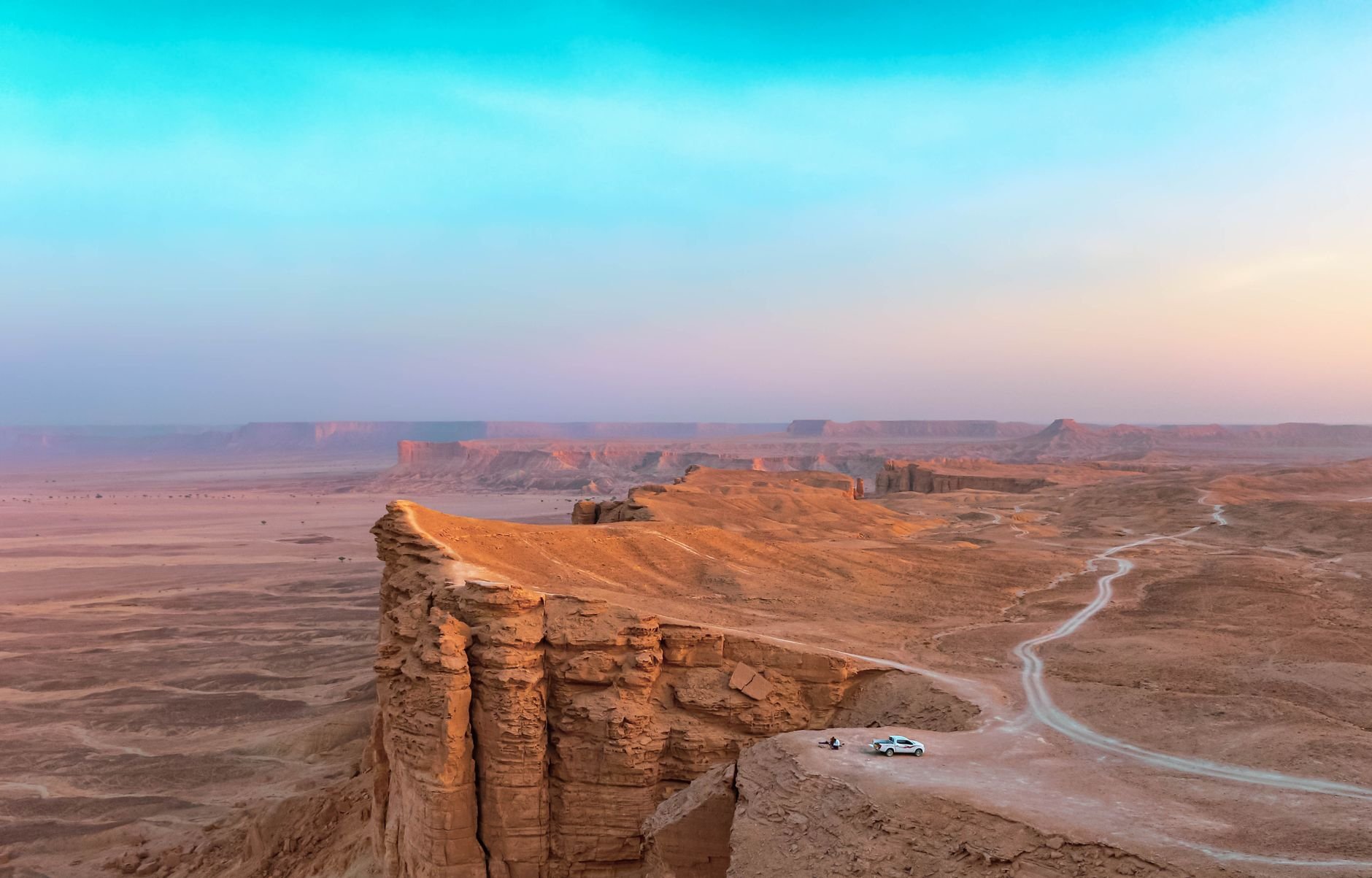
The site's proper name is Jebel Fihrayn, a dramatic break in the Tuwaiq Escarpment northwest of Riyadh, within Riyadh Region. The nickname is well earned: you stand at the top of a sheer cliff and the desert floor simply drops away hundreds of metres below, stretching to a flat horizon that once lay along an ancient ocean route. On a clear day the view genuinely feels like the edge of the planet.
There's no visitor centre, no café and no fixed gate. It's a raw, natural site — which is exactly the appeal, and exactly why you need to plan for it rather than just turning up.
How far is it from Riyadh and how long does it take?
From central Riyadh the journey is around 90–100 km, but distance is misleading here. The first part is normal highway driving; the final stretch is an unpaved, rutted desert track that slows you right down. Realistically, budget 2 to 3 hours each way depending on your start point, traffic out of the city and how cautiously you take the off-road section.
Because of that, this is a half-day commitment at minimum. A typical trip runs about 6–8 hours door to door once you factor in the drive, the walk to the viewpoints and time to enjoy the sunset.
How to get there — your three options
Option 1: Self-drive in a 4x4
The most flexible and rewarding way, if you're confident on rough terrain. You control the timing, you can stop wherever you like, and you're not tied to a group.
- Use a 4x4, not a sedan — the track is soft and rocky in places and ordinary cars regularly get stuck.
- Download offline maps before you leave — mobile coverage drops out well before you arrive.
- Don't go alone on the unpaved route; a second vehicle is a sensible backup if you get stuck.
- Carry spare fuel, water and a charged phone — there are no services out there.
Option 2: Hire a taxi or private driver
If you don't have a suitable vehicle, you can negotiate a private driver for a round trip. Standard app rides like Careem or Uber aren't designed for this kind of off-road run, so you'll typically arrange a private car or 4x4 and agree a fixed price in advance. Confirm the waiting time and the return arrangement before you set off — you don't want to be stranded while the driver leaves.
Option 3: Join an organised tour
By far the easiest option, and the best choice if you're new to the Kingdom or don't want the stress of navigating the desert track. A good operator handles the 4x4, the driving, the route and often food and extra activities. Many tours leave in the afternoon so you reach the cliffs for sunset, then add stargazing on the way back.
Browse what's on offer in our Saudi Living events listings to compare trips and dates.
What does it cost?
There's no admission fee at all — you're only paying to get there. Here's how the three options compare:
- Self-drive: fuel only, typically around SAR 100–150 for a round trip depending on your vehicle and route.
- Taxi / private driver: a negotiated round trip commonly costs around SAR 300–600 — agree the full price and waiting time upfront.
- Organised tour: advertised prices commonly start around SAR 120 rising with the date, vehicle type, meals, camel rides, cave visits and stargazing included.
One important note: tour prices cover transport and optional guiding or activities — they are not an official site entrance fee, and private-tour prices vary widely. There is no published government tariff for ordinary visitor entry.
Best time to visit and what to do
The star of the show is the sunset, when the light turns the cliffs gold and the shadows stretch across the plain below. Most afternoon trips aim to reach the viewpoints between 3pm and 6pm depending on the season, giving you time to settle in before the sun drops.
Weather matters a lot. The cooler months from roughly October to March are the most comfortable; midsummer midday heat out here is intense and best avoided. Beyond the headline viewpoint, depending on your plan or tour package you can:
- Take a short hike along the escarpment to different viewpoints.
- Stay for stargazing once the sky darkens — the lack of light pollution is remarkable.
- Add a camel ride, a visit to the nearby Bat Cave or a gazelle-reserve stop.
- Enjoy Saudi coffee, snacks or a desert dinner on the fuller tour packages.
Photography tips: catching the gold and the stars
This is one of the most photogenic spots near Riyadh, so a little timing goes a long way. The best light is during golden hour — the roughly 45 minutes before sunset — when the cliffs glow warm and the long shadows add real depth. Arrive early so you've found your spot before the light peaks.
- Golden hour and blue hour: shoot the escarpment in the warm pre-sunset light, then stay for the softer blue tones just after the sun drops.
- Night skies: once it's fully dark, the lack of light pollution makes for superb star photography. A tripod and a longer exposure will capture far more than your phone's auto mode.
- Keep a safe distance: don't edge toward the cliff for a shot — there are no barriers, and no photo is worth the risk.
What to pack
- Plenty of water — far more than you think you'll need.
- Sun protection — hat, sunglasses and sunscreen, even in cooler months.
- Sturdy, closed shoes for the rocky ground near the edges.
- A warm layer — desert temperatures drop fast after sunset.
- Offline maps and a power bank — don't rely on mobile coverage.
- Snacks and rubbish bags — there are no shops, and you carry out what you carry in.
Safety: the rules that actually matter
This is a genuinely spectacular place, but it's also genuinely exposed. A few rules keep a great day from going wrong:
- Never approach the cliff edge — there are no barriers, the rock can be loose, and the drop is sheer.
- Don't travel the unpaved route alone — a breakdown in an area with no coverage is a serious problem.
- Carry water, spare fuel, sun protection and a charged phone, and tell someone your plan.
- Check conditions before you go — the route can be affected by weather and occasional security or access restrictions.
- Head back with daylight to spare if you're self-driving; the track is far harder in the dark.
FAQs
Is there an entrance fee for the Edge of the World?
No. There is no ticket booth, entrance gate or official attraction admission fee. You only pay for transport — fuel, a driver or a tour.
Can I visit in a normal car?
It's not recommended. The final access track is unpaved and rough, and ordinary sedans regularly get stuck. A capable 4x4 is strongly recommended.
Do I need a permit or Absher booking?
No. No Absher booking, Muqeem step, Nafath verification, Tawakkalna reservation or Balady permit is required for ordinary visitor entry.
How long does the trip take from Riyadh?
Plan for about 2–3 hours of driving each way, and roughly 6–8 hours door to door once you add the hike and sunset.
What's the best time to go?
Aim for late afternoon so you catch the sunset, and visit in the cooler months (roughly October to March) when the daytime heat is manageable.
What's the weather like in summer versus winter?
Summer out here is harsh — daytime desert heat is intense and midday visits are best avoided. The cooler months from roughly October to March are far more comfortable, with mild days, but bring a warm layer because temperatures can drop sharply once the sun sets.
Is it safe to go alone?
Avoid travelling the unpaved route alone. Mobile coverage is unreliable, so go with at least one other vehicle or join an organised tour.
Ready to go? Compare upcoming desert trips and sunset outings in our Saudi Living events listings and pick the one that fits your weekend.
Stay updated with the latest news, events, sports updates, business insights, real estate and lifestyle stories on Saudi Living — the leading online platform for residents, expats, and visitors in Saudi Arabia.
Follow Saudi Living for daily updates:
- Instagram - @saudiliving
- X - @saudiliving
- Facebook - @saudiliving
- YouTube - @saudiliving
Up Next
National Museum of Saudi Arabia Riyadh: Visitor Guide
Plan your visit to the National Museum of Saudi Arabia in Riyadh: free entry, opening hours, highlights, booking and tips for exploring Al-Murabba.
Oct 15,2026
Historic Jeddah (Al-Balad): What to See, Eat & Do
Your Historic Jeddah (Al-Balad) guide: what to see, eat and do, with real SAR prices, opening hours, a walking route and insider tips.
Oct 15,2026
Hiking Trails Near Riyadh: October Weather & Safety
Hiking trails near Riyadh in October: weather, safety tips, typical costs and guided routes like Edge of the World and Al-Manjour.
Oct 15,2026
Cultural Attractions & Landmarks in Tabuk Guide
Discover Tabuk's top cultural attractions: the Archaeological Castle, Al-Tawbah Mosque, Hejaz Railway, Tayma, Al-Bad' and more in this practical guide.
Oct 15,2026Related Stories




A Perfect Weekend in NEOM: Honest 2024 Guide
Oct 26,2026Don't Miss Similar Listings
Be the first to know when new stories on this topic are published.


