
Regional Headquarters (RHQ) Programme: Tax & Setup Guide
Last updated: based on Saudi investment ministry and tax and zakat authority guidelines. Verify current rules before you file.
Here is the short answer multinationals keep asking: yes, a licensed Regional Headquarters (RHQ) in Saudi Arabia earns 0% corporate income tax on qualifying income and 0% withholding tax on certain payments to non-residents — for a renewable 30-year window. The catch is that these benefits apply only to the RHQ entity and its eligible RHQ activities, not to your other Saudi subsidiaries or branches. Below is exactly how the Regional Headquarters (RHQ) Programme works, what tax benefits you get, and the setup requirements for multinational companies you need to meet.
What the RHQ Programme actually is
The RHQ Programme lets a multinational group set up a licensed regional headquarters in the Kingdom — almost always in Riyadh — to direct, manage and support its operations across the Middle East and surrounding markets. Think of it as the group's regional command centre: strategy, oversight, coordination and shared services for the region, all run out of one Saudi legal entity.
Two authorities sit behind it. The Ministry of Investment issues the RHQ licence and sets the economic-substance rules that decide whether you genuinely qualify as an RHQ. The tax and zakat authority administers the tax incentives once you hold that licence. Both have to line up: the tax break only flows while your entity stays inside the licensing rules.
The tax benefits at a glance
The headline package is deliberately generous, and it is the main reason global groups have moved regional teams to Riyadh.
0% corporate income tax on qualifying income
An RHQ-licensed entity pays zero corporate income tax on income earned from eligible RHQ activities. That is a full exemption on the qualifying slice of what the RHQ does — a sharp contrast with the standard Saudi corporate income tax rate of typically 20% that applies to ordinary foreign-owned companies.
0% withholding tax on eligible payments
The RHQ also benefits from 0% withholding tax on certain payments to non-residents connected to its RHQ activities. In practice the zero rate applies to:
- Dividends paid by the RHQ to non-resident shareholders.
- Payments to non-resident related parties — other entities within your group.
- Payments to non-resident unrelated parties for services genuinely necessary for the RHQ's activities.
For a regional hub that routinely pays overseas affiliates and service providers, wiping out withholding tax on those flows is a real saving.
How long the incentives last
The incentive period runs for 30 years from the date the RHQ licence is issued, and it is renewable. The benefits end on the earlier of two events: the 30-year period lapsing, or the entity ceasing to qualify as an RHQ under the Ministry of Investment's guidelines. In other words, keep meeting the rules and the clock keeps running in your favour.
What is NOT exempt (read this carefully)
This is where companies get tripped up, so be precise. The 0% corporate income tax and 0% withholding tax apply only to the RHQ entity and its eligible RHQ activities. They do not automatically extend to:
- Your other Saudi subsidiaries, branches or affiliates — they keep paying tax under their own regimes.
- Non-eligible income of the RHQ entity itself, which remains subject to the standard corporate income tax rate of typically 20%.
Several taxes are also left untouched by the regime. Value-added tax at 15% still applies to taxable supplies. Real estate transaction tax and zakat continue where relevant. The RHQ licence is a targeted income-tax and withholding-tax incentive — not a blanket exemption from every Saudi levy. Building your model on the assumption that "RHQ = tax-free everything" is the fastest way to a nasty surprise at filing time.
Setup requirements: how to qualify
Getting the licence is not just paperwork — you have to run a real regional headquarters, not a shell.
Eligible RHQ activities
Only income from recognised RHQ functions qualifies for the 0% rates. These are broadly the strategic and support activities a genuine regional head office performs: regional strategic direction and management, coordination and oversight of group entities in the region, and a range of shared or advisory services provided to those entities. If an activity falls outside the approved RHQ scope, income from it is taxed normally.
Economic-substance requirements
The Ministry of Investment expects real substance in the Kingdom. In practical terms that means:
- A physical office in Saudi Arabia — typically in Riyadh — that is genuinely operational.
- Senior decision-makers and staff based in the Kingdom, with the RHQ actually directing regional operations from here.
- Real operating expenditure and headcount in line with running a regional headquarters.
The substance test protects the incentive: it exists to reward groups that move real regional decision-making to Saudi Arabia, not to reward a nameplate.
Step-by-step: establishing your RHQ
- Confirm eligibility — the RHQ must belong to a multinational group with entities across multiple markets, and your intended activities must map to approved RHQ functions.
- Apply for the RHQ licence through the Ministry of Investment, submitting group information and your regional operating plan.
- Incorporate the RHQ entity and complete standard commercial registration and government onboarding.
- Register with the tax and zakat authority to activate the 0% corporate income tax and 0% withholding tax treatment on qualifying income.
- Set up the office and hire — secure premises in Riyadh, relocate or recruit senior staff, and stand up the substance the licence requires.
- Maintain compliance — file returns, keep VAT and zakat obligations current, and preserve economic substance year on year so the incentive survives.
Costs to budget for
The tax break is only one line in the model. To run a credible RHQ in Riyadh, budget realistically for:
- Grade-A office space — prime districts such as King Abdullah Financial District (KAFD) and the Olaya/King Fahd Road corridor command premium rents; expect a meaningful annual commitment, and factor in fit-out and service charges.
- Senior salaries and relocation — moving decision-makers to Riyadh is usually the biggest cost, and it is central to meeting substance rules.
- Setup and advisory fees — licensing, incorporation, legal and tax structuring.
- Ongoing compliance — VAT at 15%, zakat where applicable, and annual filings.
Ready to find the right premises? Browse the latest commercial property listings in Riyadh on Saudi Living to compare districts, rents and lease terms before you commit.
Riyadh vs the rest: why the capital dominates
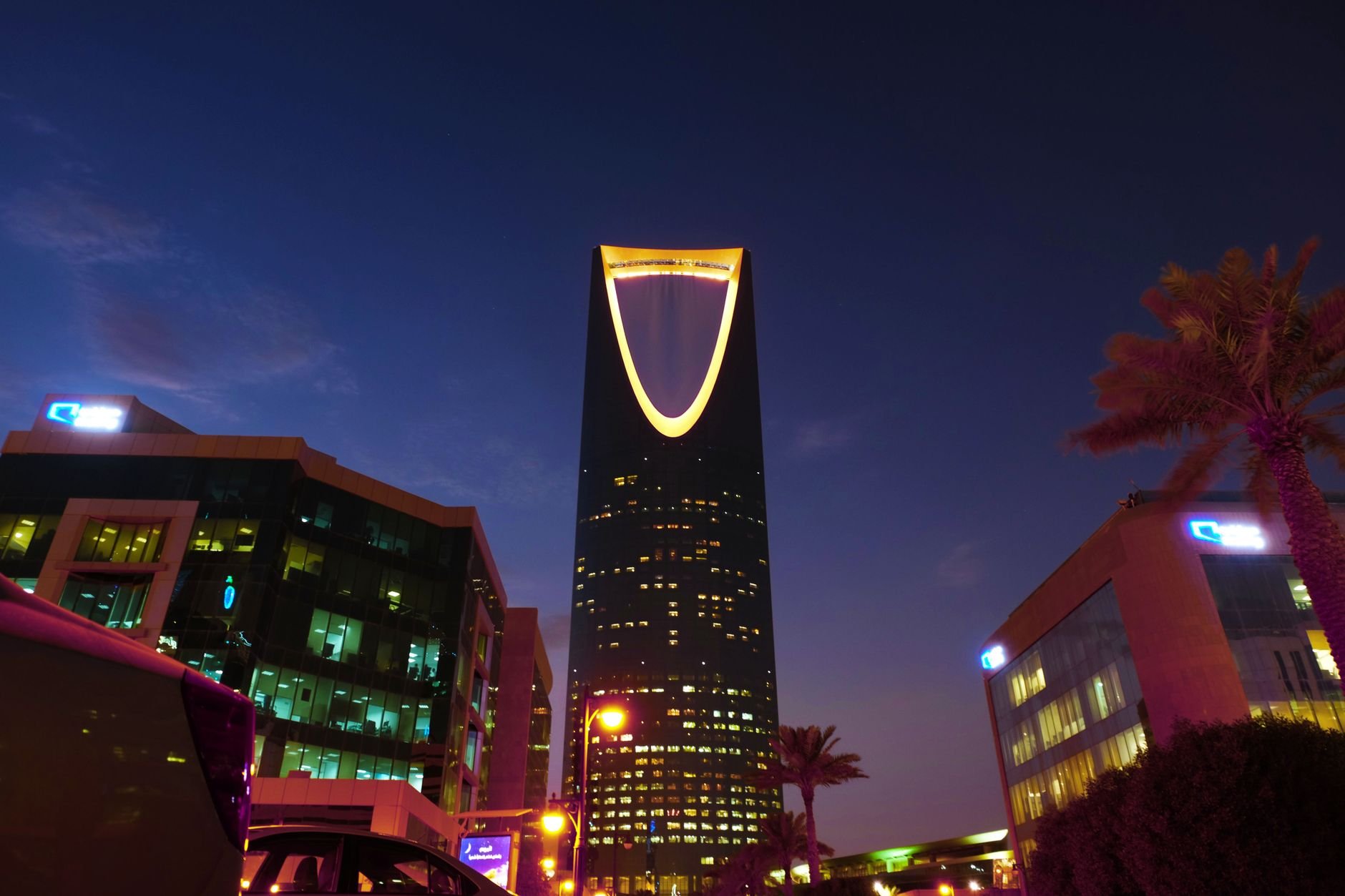
RHQs cluster in Riyadh for a reason: it is the seat of government, the ministries, the major banks and the King Khalid International Airport hub that keeps a regional executive connected to the whole Middle East. The Riyadh Metro now links the main business corridors, making it easier to place teams across KAFD, Olaya and the wider city. For groups wanting proximity to decision-makers and talent, the capital is the natural home for a regional headquarters — even as Special Economic Zones elsewhere in the Kingdom court other kinds of investment.
FAQs
Does an RHQ pay any corporate income tax at all?
Only on non-eligible income. Income from approved RHQ activities is taxed at 0%, but any income falling outside that scope is taxed at the standard rate of typically 20%.
Do the tax benefits cover my existing Saudi subsidiaries?
No. The 0% corporate income tax and 0% withholding tax apply only to the RHQ entity and its eligible activities. Other subsidiaries, branches and affiliates continue under their own tax and zakat treatment.
Is the RHQ exempt from VAT and zakat?
No. Value-added tax at 15%, zakat where relevant, and real estate transaction tax all continue to apply. The RHQ regime is an income-tax and withholding-tax incentive, not a full exemption.
How long do the incentives last?
Thirty years from the date the licence is issued, and the period is renewable. The benefits end earlier only if the entity stops qualifying as an RHQ under the Ministry of Investment's rules.
Where should the RHQ be based?
Almost always Riyadh. The capital offers proximity to ministries, banks, talent and the King Khalid International Airport, and the RHQ must maintain genuine physical presence and staff in the Kingdom to keep its incentives.
What happens if I fail the economic-substance test?
The entity can cease to qualify as an RHQ, which ends the tax incentives from that point. Maintaining a real office, senior staff and genuine regional decision-making in Saudi Arabia is essential to preserving the 0% rates.
Ready to explore setting up your regional headquarters? Start by lining up your premises — browse commercial property listings in Riyadh on Saudi Living and get your Riyadh base ready before you file for the licence.
Stay updated with the latest news, events, sports updates, business insights, real estate and lifestyle stories on Saudi Living — the leading online platform for residents, expats, and visitors in Saudi Arabia.
Follow Saudi Living for daily updates:
- Instagram - @saudiliving
- X - @saudiliving
- Facebook - @saudiliving
- YouTube - @saudiliving
Up Next

Saudi Premium Residency: Investor & Entrepreneur Routes
A guide to Saudi Premium Residency options and fees for investors and entrepreneurs, submitted online through the official portal pr.gov.sa.
Aug 29,2026
Saudi VAT 2026: Registration Thresholds Explained
Saudi VAT stays at 15% in 2026. Businesses passing SAR 375,000 in taxable supplies must register, while smaller firms can opt in voluntarily.
Aug 29,2026
MISA Investment Licence Fees Suspended for 2026
MISA investment licence issuance and renewal fees are currently suspended, with SAR 0 payable at application. Here's what investors need to know for 2026.
Aug 29,2026
Foreign Investment in Saudi Arabia: Open & Closed Sectors
Most sectors in Saudi Arabia now allow 100% foreign ownership under Vision 2030, while a short negative list keeps a few activities restricted.
Aug 28,2026Related Stories




Don't Miss Similar Listings
Be the first to know when new stories on this topic are published.


