
Ramadan in Saudi Arabia: A Resident's Guide

Ramadan is the most significant month of the year in Saudi Arabia, and living through it is one of the most memorable parts of being a resident here. The daily rhythm of life shifts entirely: mornings are quieter, evenings come alive, and a warm sense of community spreads across neighborhoods, workplaces and shopping districts. Whether you are Muslim or not, understanding how the month works will help you settle in, show respect, and genuinely enjoy the experience. This guide from سعودي ليفنج covers the practical essentials every resident should know.
What Ramadan is and when it happens
Ramadan is the ninth month of the Islamic lunar calendar, observed as a month of fasting, prayer, reflection and charity. Because it follows the lunar calendar, its start shifts earlier by roughly ten to eleven days each year, so it moves through the seasons over time. The exact start date is confirmed by official moon sighting, so always check announcements close to the date rather than relying on estimates.
- Fasting runs from dawn (Fajr) until sunset (Maghrib).
- The daily fast is broken with iftar at sunset, and a pre-dawn meal called suhoor is eaten before Fajr.
- The month ends with Eid al-Fitr, a multi-day celebration.
How daily life and work hours change
Working hours are reduced during Ramadan. Government offices and many private companies shorten the workday, and for fasting employees reduced hours are legally protected. The exact schedule depends on your employer and sector, so confirm your specific timing with your HR department. Public sector and school hours also change, so plan around adjusted openings.
- Expect slower mornings and busy late evenings.
- Many shops open later in the day and stay open well past midnight.
- Traffic peaks sharply in the hour before iftar as people rush home — avoid driving then if you can.
- Banking, government service centers and clinics may operate on adjusted hours; verify before visiting.
Eating and drinking in public
During daylight hours, eating, drinking and smoking in public are not permitted out of respect for those fasting — and this applies to residents of all backgrounds. This is an important point for non-Muslim expats to understand.
- Do not eat or drink in public spaces, streets, or in your car during fasting hours.
- Most restaurants and cafes stay closed during the day and reopen for iftar; availability of daytime dining varies, so check individual venues.
- At home or in private, non-fasting residents may eat normally.
- If you have a medical condition, keep water and any needed food discreet and private.
Iftar and suhoor traditions
Iftar is the highlight of the day. Families gather, tables fill with dates, soups, savory pastries and grilled dishes, and the fast is traditionally broken with dates and water. It is common to be invited to a friend's or colleague's iftar — accepting is a wonderful way to experience Saudi hospitality.
- Charity is central: free public iftar meals are offered near many mosques and community areas.
- Suhoor gatherings later at night are increasingly popular, with cafes and tents serving food into the early hours.
- If hosting or attending, arriving on time and bringing a small gift such as sweets or dates is appreciated.
Prayers and the spiritual atmosphere
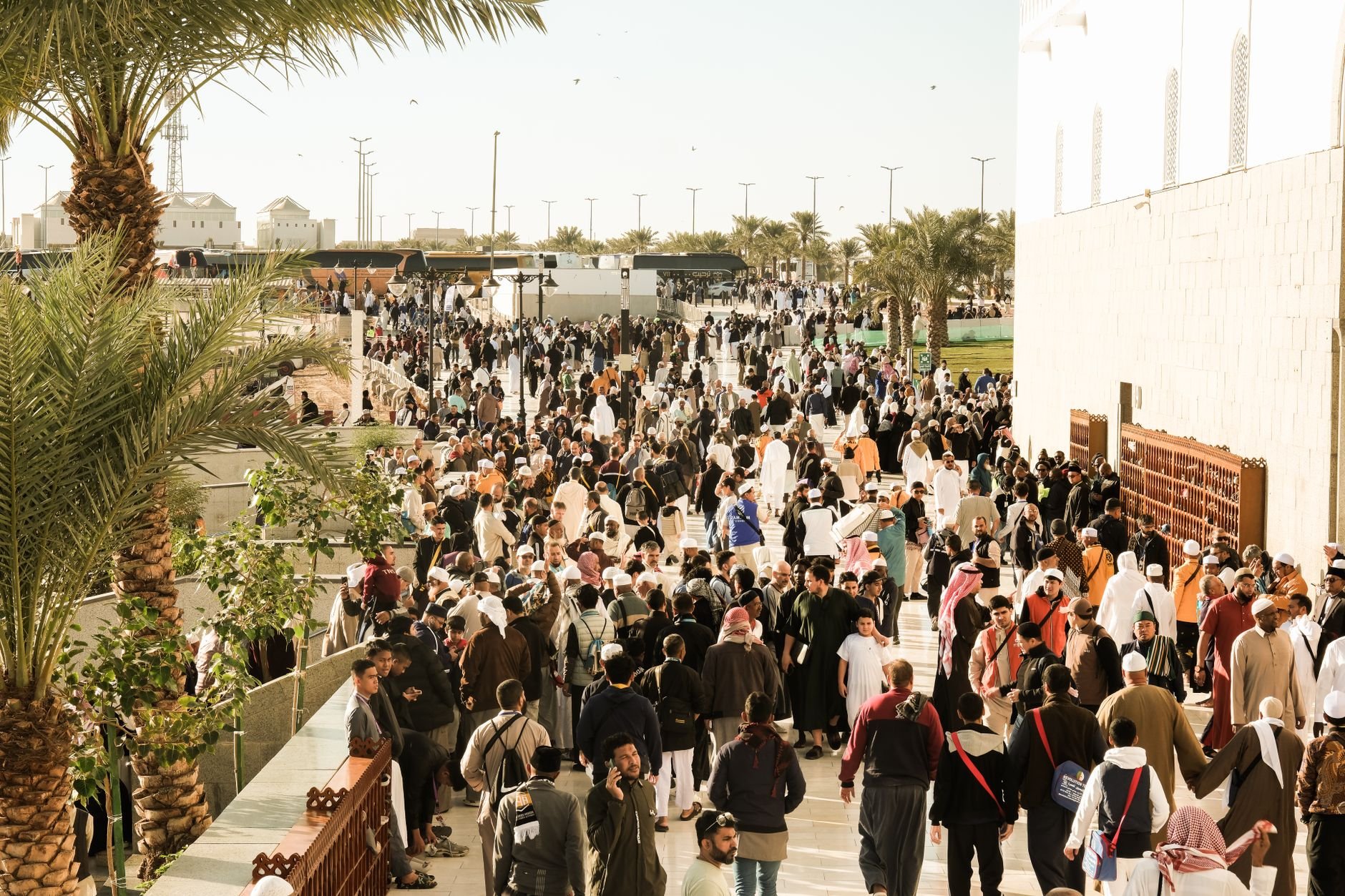
Nights during Ramadan are filled with worship. After the evening Isha prayer, mosques hold Taraweeh prayers, and the final ten nights carry special significance, including Laylat al-Qadr. You will hear the call to prayer and Quran recitation more prominently, and mosques stay busy late into the night.
Non-Muslim residents are not expected to participate, but showing quiet respect around prayer times and mosque areas is always appreciated.
Shopping, dining and Ramadan events
Evenings turn into a social season. Malls, markets and dining spots come alive after iftar, and many venues host special Ramadan tents, night markets and cultural gatherings. Grocery demand rises, so shop a little earlier in the day to avoid the pre-iftar rush.
- Delivery apps for food and groceries are extremely busy around iftar — order early.
- Ramadan-themed decorations, gifts and traditional foods appear widely across stores.
- Availability of specific events, tents and offers changes each year, so check current listings before you go.
Practical tips for residents
- Adjust your schedule: handle errands earlier and keep evenings free for social plans.
- Dress modestly, as is standard year-round, and be especially mindful during the day.
- Be patient and gracious — people are fasting, and a little understanding goes a long way.
- Greet others with "Ramadan Kareem" or "Ramadan Mubarak."
- Plan ahead for Eid al-Fitr, when many businesses close and travel demand spikes.
Embracing the rhythm of Ramadan is one of the best ways to feel at home in Saudi Arabia. Slow down, join in where you can, and enjoy a month that blends faith, family and community like no other.
Stay updated with the latest news, events, sports updates, business insights, real estate and lifestyle stories on Saudi Living — the leading online platform for residents, expats, and visitors in Saudi Arabia.
Follow Saudi Living for daily updates:
- Instagram - @saudiliving
- X - @saudiliving
- Facebook - @saudiliving
- YouTube - @saudiliving
Up Next
Ramadan in Saudi Arabia: A Resident's Guide
Everything residents and expats need to know about Ramadan in Saudi Arabia: fasting rules, public conduct, work hours, fines, and daily life tips.
Sep 15,2026
Ramadan in Saudi Arabia: A Resident's Guide
Everything residents and expats need to know about Ramadan in Saudi Arabia: fasting rules, working hours, mall timings, and daily life tips.
Sep 13,2026
Ramadan in Saudi Arabia: A Resident's Guide
Everything residents and expats need to know about Ramadan in Saudi Arabia: working hours, Absher services, iftar rules, and i'tikaf.
Sep 12,2026
Ramadan in Saudi Arabia: A Resident's Guide
Everything residents and expats need to know about living, working, and shopping during Ramadan in Saudi Arabia, from etiquette to work hours.
Sep 10,2026Related Stories




Don't Miss Similar Listings
Be the first to know when new stories on this topic are published.


