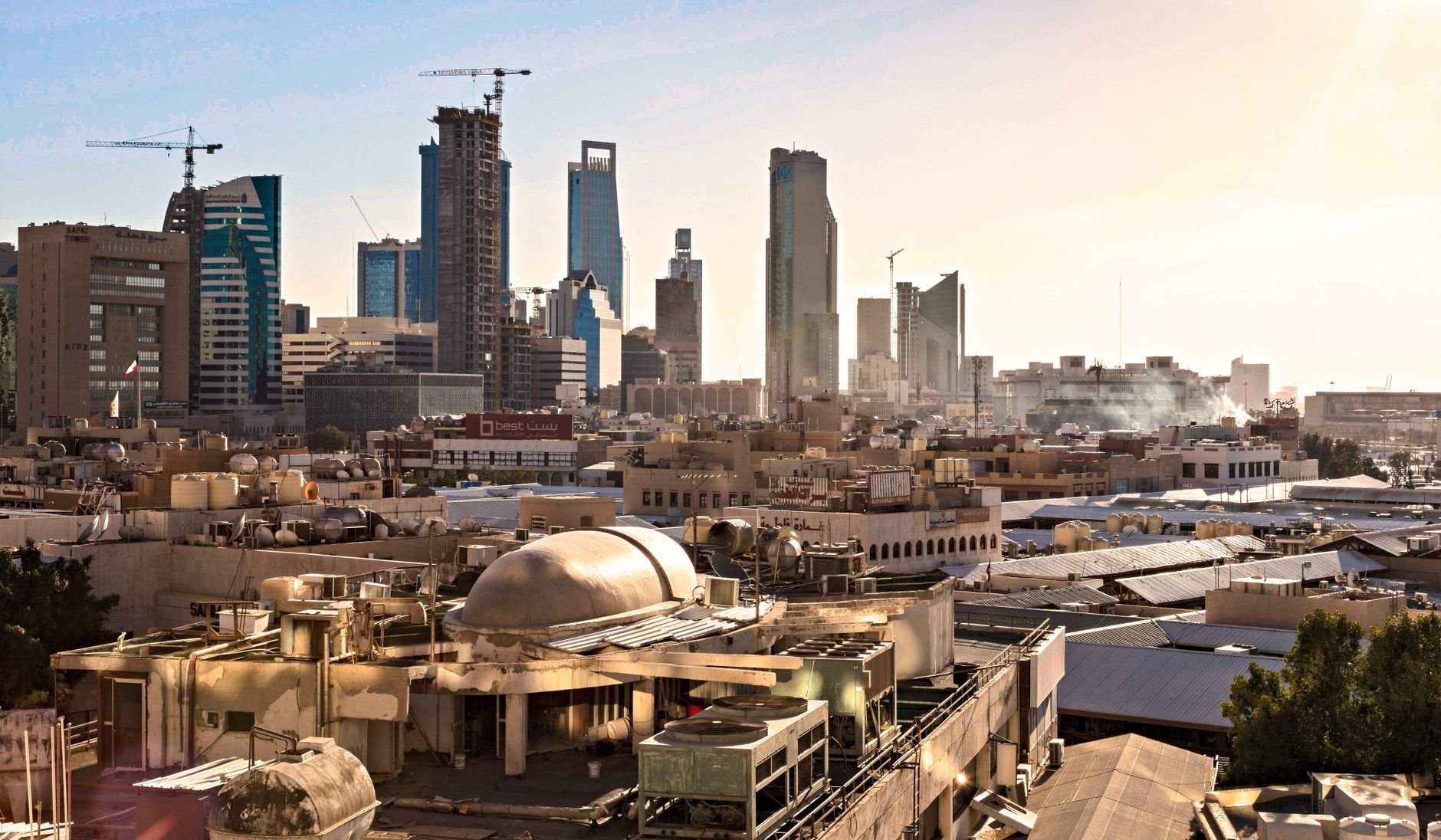
Starting a Business in Saudi Arabia: MISA 2026 Guide

If you want to start a business in Saudi Arabia as a foreign investor in 2026, here's the headline first: you no longer apply for the old standalone MISA foreign-investment licence. Since February 2025, Saudi Arabia replaced that licence with mandatory foreign-investor registration with the Ministry of Investment (MISA), completed entirely online through the Invest Saudi e-services portal. Once that registration is confirmed, you issue your commercial registration (CR) through the Ministry of Commerce and move on to licences, premises and staff. This is the step-by-step MISA foreign investment licence process for 2026 — updated for what actually applies now.
This guide covers the full process: what changed in 2025, the documents you'll need, where fees apply, and how to move from idea to operating company in Riyadh, Jeddah or anywhere in the Kingdom.
The short answer: how you set up as a foreign investor in 2026
In plain terms, the sequence is: confirm your activity is open to foreign ownership, legalise your corporate documents, register as a foreign investor with MISA online, pay the fee MISA sets on approval, issue your CR with the Ministry of Commerce, then collect your activity-specific licences and open your Qiwa labour file. No trip to MISA's headquarters is required — the registration is handled electronically.
What changed in 2025 — no more separate MISA licence
The new Investment Law that took effect in February 2025 was a genuine shift, not a rebrand. It introduced equal-treatment provisions designed to put Saudi and foreign investors on broadly the same footing, and it removed the former standalone foreign-investment licensing model. In its place sits a streamlined foreign-investor registration requirement: you must complete this registration before you conduct investment activities in the Kingdom.
In practice, this means less duplicated paperwork and a clearer digital path — but the fundamentals of due diligence, document legalisation and sector rules still apply. If you're reading guides written before 2025, treat any reference to an "SAGIA licence" or a separate "MISA investment licence" as outdated.
Step 1 — Check your activity is open to foreign investment
Before anything else, confirm that the business activity you have in mind is open to foreign investors. Most activities are, but some carry activity-specific ownership caps, minimum capital, or extra licensing conditions, and a short list remains restricted. Checking this first saves you from legalising documents for a structure you can't actually use.
Be specific about your activity codes — a trading company, a professional services firm, a restaurant and a manufacturing plant all sit under different rules and may trigger different downstream regulators.
Step 2 — Prepare and legalise your documents
This is where most timelines slip, so start early. Foreign documents generally need to be authenticated and legalised through the applicable Saudi diplomatic channel in your home country, and certified Arabic translations are required where the originals are not in Arabic.
Documents you'll typically need
- Your foreign company's commercial registration — proof your parent entity exists and is in good standing.
- Constitutional documents — articles/memorandum of association or equivalent.
- Audited financial statements — usually the most recent year.
- Board resolution / authorisation — a decision approving the Saudi investment and naming your authorised signatory.
- Passport or identity documents for shareholders and the appointed manager.
Requirements can vary by activity and investor type, so build in time for re-issuing a document if a regulator asks for more recent figures or a specific format.
Step 3 — Register with MISA on the Invest Saudi portal
With documents ready, submit your foreign-investor registration application electronically through MISA's Invest Saudi e-services portal. You upload your legalised documents, enter your company and activity details, and submit. You can then monitor the application status online — there's no need to attend MISA in person. Where identity verification is needed for government services, you'll use Nafath or another approved method.
Step 4 — Pay the MISA fee within the deadline
Here's an important reality check: the MISA registration fee is not a single fixed published SAR figure. MISA determines the amount when it approves your application, and that fee covers the full registration period stated in your approval notification.
Once MISA issues the payment notification, pay within the stated window — the current guidance allows no more than 15 business days. Miss that deadline and the application becomes void, meaning you'd have to start again. So treat the payment notification as time-sensitive.
Ignore the figures circulating online that quote a flat "SAR 12,000 issuance" or "SAR 62,000 renewal" as if they were universal — there is no reliable official basis for applying those as a one-size-fits-all cost for the 2026 process.
Step 5 — Issue your commercial registration (CR)
After MISA confirms your registration is complete, you issue your Saudi commercial registration (CR) through the Ministry of Commerce. The CR is your core trading identity in the Kingdom — you'll need it for banking, leasing premises, and nearly every subsequent step. The MISA registration and the CR are separate: the Ministry of Commerce charges its own CR fees, and Chamber of Commerce membership carries its own cost too.
Step 6 — Licences, municipal approvals and sector regulators
A CR alone rarely lets you open your doors. Depending on your activity, you'll need activity-specific licences and municipal approvals from the relevant authorities, for example:
- Balady — municipal licensing for premises, signage and many commercial activities.
- Ministry of Industry and Mineral Resources — for manufacturing and industrial projects.
- Saudi Food and Drug Authority (SFDA) — for food, beverage, cosmetics and medical activities.
- Other sector regulators — finance, health, education and transport each have their own approvals.
Map these out early. A Riyadh café, for instance, needs Balady and SFDA approvals on top of its CR; a software consultancy may need far fewer.
Step 7 — Set up your workforce on Qiwa
To hire in the Kingdom, establish your company's employment and workforce files through Qiwa and the related labour systems. This is where you manage work permits, employment contracts and your Saudization position under Nitaqat. Getting this file opened correctly early makes recruiting your first employees far smoother.
What it costs — a realistic breakdown
Because several figures are variable, treat any single "total setup cost" online with caution. Here's how the real costs stack up:
- MISA registration fee — set by MISA at approval; covers the registration period stated in your notification. Not a fixed public number.
- Commercial registration (CR) — Ministry of Commerce fee, separate from MISA.
- Chamber of Commerce membership — its own annual fee.
- Municipal (Balady) fees — depend on your activity and premises.
- Activity-specific licence fees — vary by regulator (SFDA, industry, etc.).
- Employee-related charges — work permits and labour-related costs via Qiwa.
The honest takeaway: budget in ranges, confirm each fee at the point you reach that step, and don't anchor to a viral "all-in" number.
Keeping your registration valid
Setup isn't a one-and-done event. You may be required to submit annual information updates, including keeping your foreign parent company's commercial registration valid. There isn't one universal validity period that applies to every registration — your approved registration period, and any applicable fee, are stated in your MISA approval notification, so check yours and diarise the renewal well ahead.
FAQs
Do I still need a MISA foreign-investment licence in 2026?
No. Since February 2025, the separate foreign-investment licence was replaced by mandatory foreign-investor registration with MISA, completed online. You must finish this registration before carrying out investment activities.
How much is the MISA registration fee?
There is no single fixed published SAR amount. MISA sets the fee when it approves your application, and it covers the registration period stated in your approval notification. Be wary of online figures presented as universal.
How long do I have to pay once approved?
Pay within the window shown in MISA's payment notification — the current guidance allows no more than 15 business days. If you miss it, the application becomes void and you'd need to reapply.
Do I have to visit MISA in person?
No. Registration is submitted and tracked electronically through the Invest Saudi e-services portal, with Nafath or another approved method used for identity verification where required.
Is MISA registration the same as my commercial registration?
No — they're distinct. After MISA confirms your registration, you issue your CR separately through the Ministry of Commerce, which charges its own fees, as do the Chamber of Commerce and municipal authorities.
Can a foreign investor own 100% of a Saudi company?
Many activities are open to full foreign ownership, but some carry activity-specific ownership caps, capital requirements or extra licensing, and a small number remain restricted. Always confirm the rules for your exact activity before you start.
Setting up correctly from day one saves months of back-and-forth. Work through the steps above in order, confirm each fee as you reach it, and keep your documents and renewals current. Ready to find a home for your new venture? Browse our Saudi Arabia properties listings for office and commercial space, and explore jobs in Saudi Arabia on Saudi Living when you're ready to build your team.
Stay updated with the latest news, events, sports updates, business insights, real estate and lifestyle stories on Saudi Living — the leading online platform for residents, expats, and visitors in Saudi Arabia.
Follow Saudi Living for daily updates:
- Instagram - @saudiliving
- X - @saudiliving
- Facebook - @saudiliving
- YouTube - @saudiliving
Up Next

Saudi LLC: No Minimum Capital Required to Start
A Saudi LLC can be set up by one or more persons with no statutory minimum capital, through the Ministry of Commerce electronic channel.
Oct 18,2026
VAT Registration in Saudi Arabia: Who Must Sign Up
Saudi businesses with taxable supplies above SAR 375,000 must register for VAT. Here are the thresholds, steps, and requirements.
Oct 18,2026
Foreign Investors Must Register With MISA From Feb 2025
Under the Investment Law effective February 2025, foreign investors must register with MISA before starting activity in Saudi Arabia. Here is what to know.
Oct 18,2026
Saudi Commercial Registration Fees and Steps Explained
A clear guide to issuing a Commercial Registration in Saudi Arabia: fees, steps, validity, and payment through the Saudi Business Center.
Oct 17,2026Related Stories





Don't Miss Similar Listings
Be the first to know when new stories on this topic are published.